
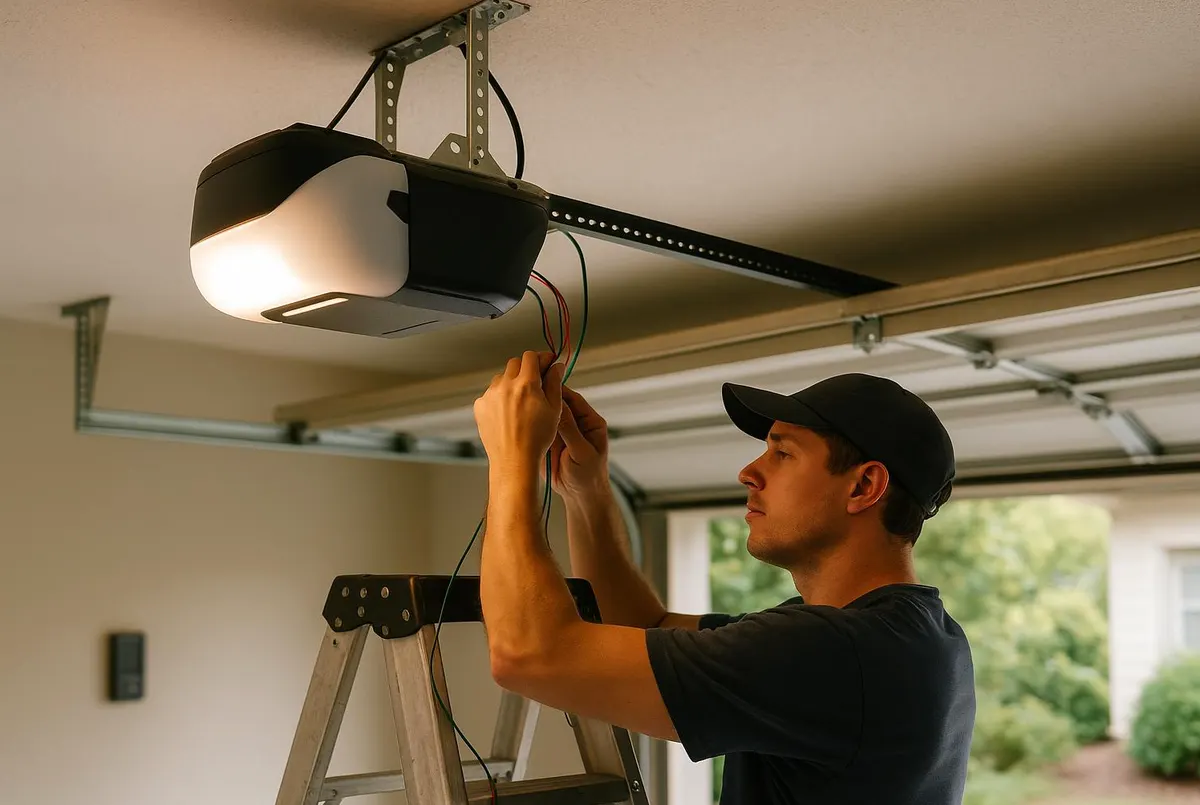
If you do one thing for your garage door this fall, make it a twenty-minute visual and function check before the first heavy rain and cold snap settle in. The exceptions: if the door grinds, jerks, hangs crooked, or you notice a visibly bent or stretched spring, skip the DIY routine entirely and call a technician instead—springs and bent tracks are not a homeowner repair.
Tools You'll Need
- Flashlight
- Work gloves
- Socket wrench or screwdriver set
- Silicone-based garage door lubricant (not WD-40 or grease)
- Clean rag
- A 2x4 board or a roll of paper towels
- Stepladder
The Routine, Step by Step
- Shine a light down both tracks. Look for rust, dirt buildup, or pine debris caught in the rollers—common after a summer of heat and heavy rain. Wipe tracks clean with a dry rag; don't lubricate the tracks themselves.
- Check the weatherstripping. Run a hand along the bottom seal and side seals. Cracked or flattened rubber lets water in during downpours and invites humidity straight into the garage. Note any sections that need replacing.
- Test the balance. Pull the emergency release cord to disconnect the opener, then lift the door halfway by hand. A properly balanced door stays put on its own. If it slides down or shoots up, the springs are compensating incorrectly—stop here and treat this as a technician job, not a DIY fix.
- Tighten visible hardware. Using a socket wrench, snug up the bolts on hinges, roller brackets, and the track itself. A season of vibration from daily use loosens these gradually, and loose hardware is one of the most common causes of a noisy door.
- Lubricate the moving parts. Apply silicone-based lubricant to hinges, roller stems, and the spring coils (skip nylon rollers—they don't need it). A light coat goes further than a heavy one; wipe off excess so it doesn't attract dust and pollen.
- Test the auto-reverse safety feature. Place the 2x4 or paper towel roll flat on the ground where the door closes. Run the closing cycle. The door should touch the object and reverse immediately. If it doesn't, the opener's safety sensors need professional attention.
- Clean the photo-eye sensors. Wipe the small lenses near the bottom of each track with a soft, dry cloth. A film of pollen or humidity residue is a frequent, overlooked cause of a door that won't close.
- Run a full open-close cycle and just watch and listen. Note any grinding, jerking, uneven movement, or spots where the door hesitates. Write it down—specific symptoms help a technician diagnose faster if you do need a visit.
Where the Homeowner's Job Ends
Everything above is safe to do with basic tools and a cautious approach. What's off-limits for DIY: adjusting or replacing torsion or extension springs, repairing frayed or snapped cables, straightening a bent track, opening the opener's circuit board, or realigning a door that's come off its track. These involve stored tension or electrical components that can cause serious injury if handled without the right equipment, and getting them slightly wrong often causes more damage than the original problem.
When to Call Pamplico Garage Door
If your balance test fails, the auto-reverse doesn't trigger, you hear grinding that lubrication doesn't fix, or a panel took a hit from storm debris, it's time to bring in a technician. Pamplico Garage Door handles Spring Replacement and full Maintenance & Tune-Up visits that cover everything on this list plus the parts that need specialized tools—track alignment, cable tension, and opener calibration included. A seasonal tune-up before winter weather arrives is usually far cheaper than an emergency repair call once a cable snaps or a panel caves from ice buildup.
If you're in Pamplico, Florence, Lake City, Johnsonville, Timmonsville, Hemingway, Scranton, or Effingham and want a professional to check what a twenty-minute routine can't, give Pamplico Garage Door a call. We show up on time, diagnose it straight, and get your door ready for whatever this South Carolina fall and winter bring.